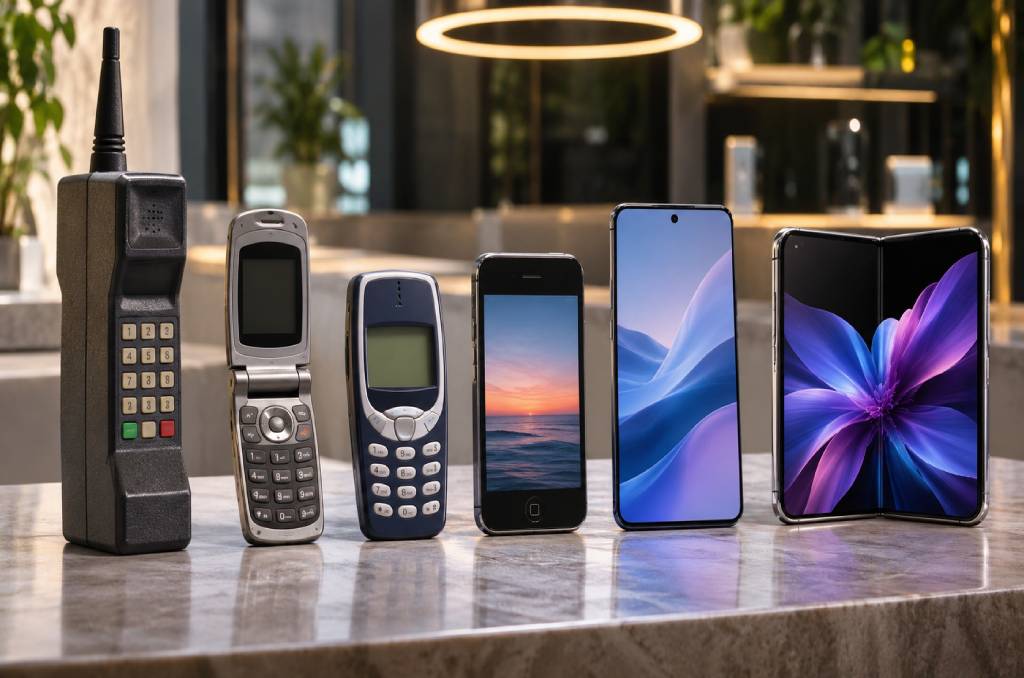
The evolution of smartphone design moved from heavy brick handsets to touchscreen slabs in 2007. It then led to slim frames, punch-hole cameras, and foldable screens. Each step made phones lighter, smarter, and easier to use.
Phone design took many years to reach today’s look. Every change solved a real problem, such as size, typing, or screen space.
That history also shapes what you see when you check Oppo all phone price in Bangladesh. You can then compare screens, cameras, and fingerprint sensors with more confidence.
This post covers the key design shifts and shows how to use them when you pick your next phone.
How Did Phone Design Start With Brick Handsets?
The first mobile phones were large, heavy handsets built only for calls. The Motorola DynaTAC set the early standard. Its thick, blocky shape made it look like a brick.
These phones had a small display, a long antenna, and a big keypad. They proved that people wanted to talk on the move.
Still, the size made them hard to carry in a pocket. Designers then focused on one goal. They wanted to make phones smaller.
How Did Flip Phones and Feature Phones Improve Design?
Flip phones and feature phones made mobiles smaller, more colorful, and more personal. Motorola’s MicroTAC brought a flip design in 1989, and color arrived by the late 1990s.
Siemens added a color display in the S10 in 1997. Nokia brought bright color to phone bodies with the 5110 in 1998. Makers also tried sliding keyboards, swivel screens, and early cameras. Buyers began to pick a phone for its look, not only its signal.
When Did Touchscreens Take Over Smartphone Design?
Touchscreens took over after Apple launched the iPhone in 2007. It removed most buttons and made a large finger-controlled screen the center of the phone.
IBM released the Simon in 1994. It had a stylus and could send emails. Its thick body still looked like a brick, so it never became popular.
The iPhone solved these problems for most people. In 2008, the HTC Dream became the first Android phone. It had a sliding keyboard but kept the same flat, rectangular shape. Soon, most brands followed the same design.
Key Milestones in Smartphone Design at a Glance
This table shows how phone design changed across three decades. Each row marks a shift in how people hold and use their phones.
| Year | Device | Design Change |
| 1989 | Motorola MicroTAC | Compact flip design |
| 1994 | IBM Simon | Early stylus touchscreen |
| 1997 | Siemens S10 | Color display |
| 2007 | Apple iPhone | Large touchscreen, few buttons |
| 2008 | HTC Dream | First Android phone |
| 2018 | Oppo Find X | Motorized pop-up camera |
| 2018 | Royole FlexPai | First commercial foldable |
| 2019 | Motorola Razr | Foldable flip phone |
How Did Bigger Screens and Smaller Bezels Change Phones?
Phone makers kept growing the screen while shrinking the frame around it. Notches, punch-hole cameras, and pop-up cameras all helped fit more display into the same body.
Oppo’s Find X used a motorized pop-up camera in 2018. That design kept the front screen clear. A smaller frame gives you a bigger screen without a bigger phone. Later, most brands moved to small cutouts, such as drop-style notches and punch-hole cameras.
Fingerprint sensors also moved. Many budget phones use a side sensor, while higher models place the sensor under the screen. Higher-end Oppo phones also use AMOLED displays with fast refresh rates for smoother scrolling.
Why Are Foldable Phones the Next Big Design Shift?
Foldable phones are the biggest design change since the iPhone. They fit a larger screen into a pocket-sized body by bending in the middle.
Royole’s FlexPai was the first commercially available foldable phone. It started shipping in December 2018. Motorola brought back the flip shape with the Razr in 2019. Samsung launched the Galaxy Z Fold the same year.
Foldables still cost more and can be fragile. That is why most buyers still choose a regular slab phone.
Which Design Features Matter When You Buy a Phone Today?
Focus on screen type, refresh rate, fingerprint sensor, and dust and water protection. These four features shape your daily comfort more than a thin body or a trendy color.
Use this table to compare them quickly.
| Feature | What It Does | What to Look For |
| Screen type | Controls color and contrast | AMOLED for videos, LCD for tight budgets |
| Refresh rate | Controls scrolling smoothness | 90Hz or higher |
| Fingerprint sensor | Unlocks your phone | Side sensor for speed, under-screen for a clean look |
| Camera cutout | Takes space from the display | Small punch-hole or drop-style cutout |
| IP rating | Resists dust and splashes | IP54 or higher |
Common Mistakes Buyers Make About Phone Design
Many buyers judge a phone by looks alone and miss daily comfort. A few simple checks can save money and frustration.
- Choosing the thinnest phone. A slim body can hide a small battery. Check the battery size before you decide.
- Ignoring display type. Two phones with the same screen size can look very different. Read the spec sheet for AMOLED or LCD.
- Paying for a foldable without a need. Foldables cost more. A regular phone handles most daily tasks well.
- Skipping the hands-on test. Photos hide weight, grip, and sensor position. Hold the phone first when you can.
- Forgetting protection. Big glass screens crack easily. Use a case and a screen protector.
Quick Checklist Before You Choose Your Next Phone
A short checklist keeps your choice simple. Match each design feature to how you use your phone every day.
- Set your budget first. Pick a price range before you compare designs.
- Pick your screen type. Choose AMOLED if you stream and game often.
- Check refresh rate and battery. Smooth scrolling and long battery life matter every day.
- Test the grip. Make sure the weight and size feel right in your hand.
Smart Suggestions for Choosing a Phone That Lasts
The best phone fits your daily habits and your budget. These suggestions help you pick a design you will enjoy for years.
- Match the phone to your habits. Heavy video and gaming users gain the most from AMOLED and a high refresh rate. Light users can save money with a good LCD model.
- Check the warranty. Buy an official phone with a valid warranty. Screen and glass repairs can be costly.
- Compare two or three models. Put their screens, batteries, and sensors side by side before you pay.
