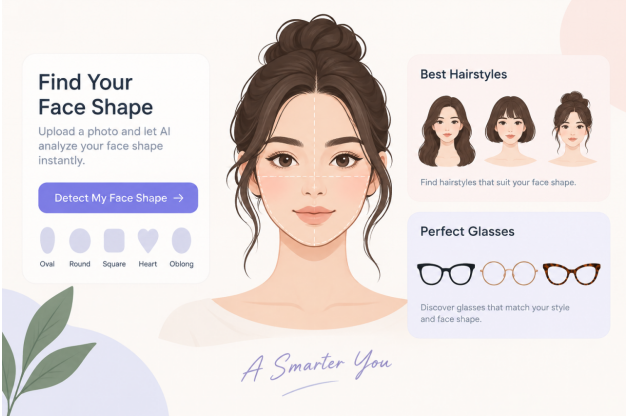
A hairstyle or a pair of glasses can change the way facial features are noticed. The right choice can make a face appear longer, softer, more defined, or more balanced.
That does not mean there is one perfect style for every person. Instead, understanding facial structure gives a useful starting point for making choices that feel more natural.
Face shape is only one part of the picture, but it can help explain why some cuts and frames seem to work better than others.
Start With Structure, Not Trends
Trends change quickly, but facial proportions remain a more reliable guide. Before choosing a haircut or a new pair of frames, it helps to look at a few basic features:
- Face length
- Forehead width
- Cheekbone width
- Jawline shape
- Chin shape
A person who is unsure where they fit can compare these features manually or use a Face Shape Detector as a starting point. The goal is not to label a face perfectly, but to better understand its overall proportions before making styling decisions.
The Six Main Face Shapes and What Makes Them Different
Each face shape has a different balance of length, width, and angles.
| Face Shape | Common Features | Styling Goal |
| Oval | Balanced width and length | Maintain natural proportion |
| Round | Soft jawline and fuller cheeks | Add length and definition |
| Square | Broad forehead and strong jaw | Soften angular features |
| Heart | Wide forehead and narrow chin | Balance the upper and lower face |
| Diamond | Wider cheekbones with a narrow forehead | Balance cheekbone width |
| Oblong | Noticeably longer than wide | Add width and reduce visual length |
Choose a Hairstyle Based on the Effect You Want
Rather than asking which haircut is “best,” it can be more useful to think about what visual effect the hairstyle should create.
If You Want the Face to Look Longer
Rounder faces often benefit from styles that create vertical movement. Height at the crown, longer layers, and side parts can make the face appear slightly longer.
Too much volume directly beside the cheeks can have the opposite effect, so the placement of volume matters just as much as the haircut itself.
If You Want to Soften a Strong Jawline
Square or angular faces can look balanced with softer movement around the jaw. Waves, textured layers, and side-swept fringes can reduce the appearance of very sharp lines.
The idea is not to hide the jaw, but to create contrast between strong facial angles and softer hair movement.
If You Want to Add Width
Long or oblong faces may benefit from hairstyles that create more volume at the sides. Curtain bangs, chin-length cuts, and medium-length layered styles can help make a long face appear more balanced.
Very flat, long hairstyles may make the face look even longer, especially when there is little movement around the sides.
If You Want to Balance a Wider Forehead
Heart-shaped faces usually have more width through the forehead and a narrower chin. Side fringes, soft layers, and volume around the jaw can create a more even visual balance.
Hair Texture Can Change the Recommendation
Face shape should never be considered alone. Hair texture plays an equally important role.
A layered haircut may create soft movement in straight hair but much more volume in curly hair. Fine hair may need lighter layering to avoid looking thin, while thick hair may require more structure to control bulk.
How Glasses Can Change Facial Proportions
Glasses create strong visual lines across the face, which means frame design can influence how facial structure is perceived.
Important details include:
- Frame width
- Lens shape
- Bridge position
- Frame thickness
- Brow-line placement
Use Contrast When Choosing Frame Shapes
Round Faces
Rectangular, geometric, and angular frames can add definition to soft facial lines. Frames that are slightly wider may also create a more balanced appearance.
Square Faces
Round or oval glasses can soften a strong jaw and broad forehead. Thin frames can also reduce the amount of visual weight across the upper face.
Oval Faces
Oval faces tend to work with many frame styles because their proportions are already fairly balanced. Even so, frame width should still match the width of the face.
Heart-Shaped Faces
Frames that do not add too much weight around the forehead often work well. Light frames, rounded designs, or styles with more visual interest toward the lower half can create balance.
Diamond Faces
Oval, curved, or subtle cat-eye frames can work well with prominent cheekbones. The aim is usually to avoid making the widest part of the face look even broader.
Oblong Faces
Deeper or slightly oversized frames can add visual width and reduce the appearance of facial length.
Face Shape Is Only One Part of Facial Balance
Two people may both have oval faces but still look very different because facial balance depends on more than the outline of the face.
The distance between the eyes, forehead height, cheekbone placement, nose length, chin shape, and overall symmetry can all affect how a hairstyle or frame looks. Looking at broader proportions through concepts such as the Golden Ratio Face can help explain why the same style may create a different result on different people.
Match Your Hairstyle and Glasses Together
Hair and eyewear should not always be chosen separately because they share the same visual space.
For example, heavy bangs combined with thick frames can make the upper face look crowded. Short hair paired with oversized glasses can make the frames the strongest feature. Soft waves and rounded glasses may create a gentler look, while angular cuts and structured frames can produce a sharper appearance.
The best combination depends on the effect a person wants to create.
A Simple Checklist Before Choosing
Before settling on a hairstyle or new glasses, ask:
- What is my general face shape?
- Which features do I want to highlight?
- Do I want more softness, length, width, or definition?
- Does the hairstyle work with my natural hair texture?
- Are the frames proportional to my face?
- Do the hairstyle and glasses work well together?
Conclusion
Face shape can make choosing hairstyles and glasses much easier, but it should be treated as a guide rather than a rulebook. The best style usually comes from combining facial proportions with hair texture, comfort, lifestyle, and personal preference. When all of these factors work together, the result is more likely to feel balanced, practical, and natural.
