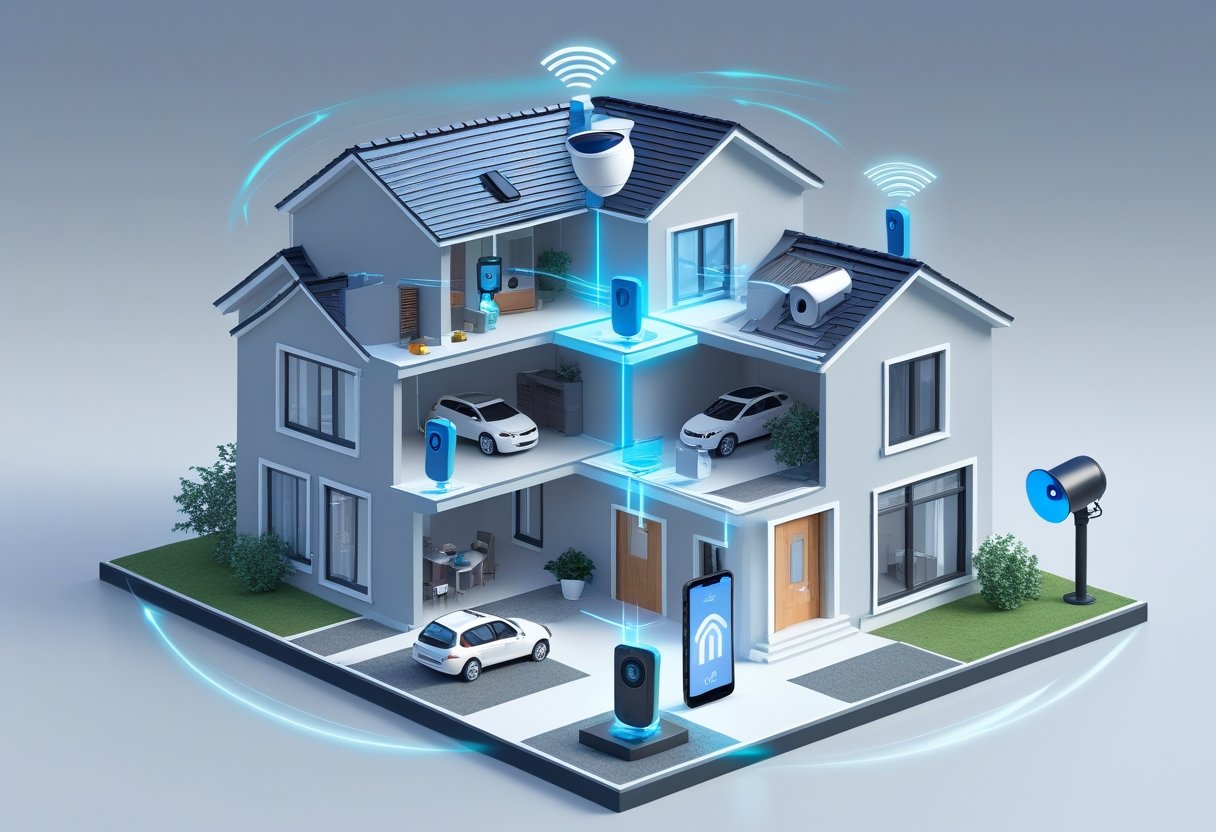
A safe and comfortable home begins with reliable protection, thoughtful planning, and technology that helps homeowners stay aware of what is happening around their property. As residential technology continues to advance, protecting a home involves more than traditional locks and basic alarm systems. Modern solutions can combine surveillance cameras, motion detectors, smart locks, door and window sensors, video doorbells, automated lighting, and remote monitoring features to create a more comprehensive security environment. These technologies help residents monitor important areas, manage access, and receive alerts when unusual activity occurs. Professional home security planning focuses on identifying potential vulnerabilities, choosing suitable equipment, and integrating different devices into a system that is easy to operate. Every property has different requirements, so effective protection should reflect the building’s layout, entrances, outdoor areas, daily routines, and the needs of the people living inside. By combining practical security habits with dependable technology, homeowners can improve awareness, strengthen access control, and create a more organized approach to protecting their families and belongings.
Understanding the Foundations of Residential Protection
An effective residential protection strategy begins with understanding how different security measures work together. Exterior doors, windows, garages, side entrances, and accessible outdoor areas may require different types of protection depending on their design and use. Strong locks and secure entry points provide an important physical foundation, while connected sensors and cameras can help homeowners monitor activity and identify potential concerns. Alarm systems can provide an additional warning when a protected door or window opens unexpectedly, and motion detectors may help identify movement in selected areas. Professional home security planning considers these individual components as part of a coordinated system rather than treating each device as an isolated purchase. A complete assessment should also consider lighting conditions, visibility around entrances, existing wiring, wireless coverage, and the household’s preferred method of receiving alerts. The purpose is to create multiple complementary layers of protection, making it easier to identify unusual activity and respond appropriately. A balanced approach can improve security without making everyday routines unnecessarily complicated for residents or authorized visitors.
Smart Cameras for Improved Property Monitoring
Security cameras allow homeowners to observe important areas of their property and review recorded footage when necessary. Depending on the selected equipment, cameras may provide high-definition video, night vision, motion detection, remote viewing, two-way audio, and recording options. Outdoor cameras can monitor driveways, entrances, garages, and other accessible areas, while indoor cameras may be useful in shared spaces when placed with appropriate attention to privacy. Some systems send notifications when motion is detected, allowing residents to check the situation through a compatible smartphone application. Camera placement is especially important because walls, trees, lighting conditions, and viewing angles can affect image quality. Homeowners should position cameras to capture useful views of entry points without unnecessarily recording neighboring properties or private spaces. Recording quality, storage capacity, network reliability, and software support should also be considered before installation. Cameras cannot prevent every incident, but they can improve visibility and provide useful information. When incorporated into a broader home security strategy, they help homeowners monitor selected areas and make more informed decisions about potential concerns.
Smart Locks and Controlled Entry Management
Doors are among the most important points to protect in any residence, and access control can make everyday entry more convenient while supporting stronger security practices. Smart locks may allow authorized users to unlock doors through mobile applications, keypads, compatible smart home systems, or other supported methods. Depending on the model, homeowners may create temporary access codes for guests or service providers, review access activity, and receive notifications when a door is locked or unlocked. These functions can be useful for busy households where multiple people need access at different times. However, electronic features should complement sound physical security rather than replace it. The door, frame, strike plate, and locking hardware must all be suitable for the intended level of protection. Before installation, homeowners should verify compatibility with the existing door and understand how the lock operates during a power or connectivity interruption. Backup access methods, battery alerts, and secure account settings are also important. A carefully configured system can make entry management more convenient while helping residents maintain greater control over who can access the property.
Alarm Systems and Motion Detection Technology
Alarm systems provide an additional layer of protection by detecting selected events and alerting occupants when a monitored condition occurs. Door and window contact sensors can identify when an entry point opens, while motion detectors can monitor movement within designated areas. Glass-break sensors, garage sensors, and other compatible components may be added according to the property’s layout and the homeowner’s needs. When a sensor detects an event, the system may sound a local alarm, send a mobile notification, or communicate with a monitoring service if the selected setup supports that feature. Proper installation and configuration are essential because incorrect sensor placement can lead to missed detections or repeated false alarms. Homeowners should consider pets, moving curtains, heating vents, sunlight, and other environmental factors that may affect sensor performance. Alarm settings should also reflect how residents enter and leave the home, ensuring that authorized activity does not routinely trigger unnecessary alerts. Combining reliable sensors with clear notification procedures makes home security systems more useful by helping residents distinguish ordinary household activity from events that deserve attention.
Video Doorbells for Safer Visitor Awareness
A video doorbell allows residents to see and communicate with visitors without immediately opening the front door. Many models include a camera, microphone, speaker, motion detection, night vision, and mobile notifications. When someone approaches the entrance or presses the doorbell, homeowners may be able to view a live image and speak through a compatible application, even when they are away from home. This can help residents handle deliveries, identify unexpected visitors, and decide whether to open the door. Video doorbells can also complement smart locks and exterior lighting when the devices are compatible with the same automation platform. Selecting an appropriate model requires attention to image quality, viewing angle, Wi-Fi coverage, power requirements, recording options, and ongoing subscription costs where applicable. Placement should provide a clear view of the entrance while respecting the privacy of neighbors and passersby. Homeowners should also use strong account credentials and keep device software updated. When configured properly, a video doorbell can become a practical part of a connected security system, helping residents manage visitors with greater convenience and awareness.
Smart Lighting for Better Visibility Around the Home
Outdoor lighting is an important part of residential protection because well-lit entrances, pathways, garages, and other accessible areas are easier to observe. Smart lighting adds flexibility by allowing homeowners to schedule lights, adjust brightness, control fixtures remotely, or activate illumination when compatible motion sensors detect movement. For example, pathway lights may switch on during evening hours, while a motion-triggered light can illuminate an entrance when someone approaches. Automated indoor lighting can also be programmed to follow realistic schedules while residents are away, although it should not be treated as a substitute for other protective measures. Lighting placement matters because poorly positioned fixtures can create glare, deep shadows, or dark areas that remain difficult to monitor. Homeowners should choose equipment suitable for outdoor conditions and ensure that electrical installations meet applicable safety requirements. Integrated lighting can also improve convenience when residents arrive home after dark or need to move safely around exterior areas. As part of a broader protection plan, well-designed illumination supports visibility and makes it easier to use cameras and observe activity around important access points.
Integrating Home Security With Smart Home Automation
Connected security equipment becomes more convenient when it can work alongside other compatible home systems. For example, an approved automation routine might switch on selected lights when an alarm is triggered, notify a homeowner when a monitored door opens, or adjust certain settings when the household enters an away mode. Smart locks, cameras, contact sensors, lighting controls, and voice assistants may be integrated through a shared platform when the devices support the necessary connections. This coordination can reduce the need to manage each product separately and help create consistent routines for everyday use. However, integration should be planned carefully because not every device works with every platform, and some features may depend on internet access, subscriptions, or specific hardware. Homeowners should also consider what happens if a network connection fails or a central controller becomes unavailable. Essential access and safety functions should have appropriate backup methods wherever possible. A professionally designed home security system can balance automation with reliable independent operation, allowing residents to benefit from connected features without depending unnecessarily on a single device or service.
Protecting the Home Network and Connected Devices
Digital security is increasingly important because many residential protection devices communicate through wireless networks, mobile applications, and cloud-based services. Cameras, electronic locks, alarm systems, and smart home controllers may involve sensitive information or provide access to important household functions. Weak passwords, outdated firmware, excessive account permissions, and poorly configured networks can create avoidable vulnerabilities. Homeowners should use unique passwords for important accounts, enable multifactor authentication when available, install manufacturer updates, and review which people and applications can access their devices. It is also helpful to understand how recordings are stored, how long information is retained, and whether remote access requires a subscription. Where appropriate, a properly configured network can separate certain smart devices from computers and other equipment containing sensitive information. Unused accounts should be removed, and access codes should be changed when they are no longer needed. Privacy also deserves consideration when installing cameras or microphones, particularly in bedrooms, bathrooms, and other personal spaces. Responsible digital practices support the physical protection offered by connected equipment and help homeowners maintain greater control over their information.
Choosing the Right Security Equipment for Your Needs
Selecting security equipment requires more than comparing product prices or choosing the devices with the most features. Homeowners should first identify the areas that need attention and determine which functions would provide meaningful benefits. A small property may benefit from reliable door and window sensors, a video doorbell, suitable outdoor lighting, and a few strategically positioned cameras. A larger home may require several access points, multiple network access points, additional sensors, and a more advanced control system. Equipment compatibility, installation requirements, image quality, battery life, weather resistance, storage options, warranties, and long-term operating costs should all influence the decision. It is also important to consider whether residents prefer a simple system with local alerts or a setup that supports professional monitoring. Different households have different comfort levels and budgets, so the best solution is one that meets practical requirements without introducing unnecessary complexity. A clear plan helps avoid buying overlapping devices or equipment that cannot communicate effectively. Reviewing the available options before installation can improve usability and reduce the likelihood of expensive changes later.
Why Professional Installation and Configuration Matter
Professional installation can be valuable when a security system includes several connected devices, electrical components, network requirements, or advanced automation features. Cameras must be positioned to provide useful coverage, sensors need appropriate placement, and smart locks must be compatible with the door hardware. Network configuration also affects how reliably devices communicate and how securely they can be accessed. Poorly configured systems may generate frequent false alerts, experience connection problems, or fail to perform as expected during important situations. An experienced installer can assess the property, recommend suitable equipment, organize device placement, configure the control platform, and test the system before completing the project. Homeowners should ask about equipment compatibility, installation procedures, warranty coverage, software updates, account ownership, and future technical support. They should also retain control of their own accounts and avoid sharing passwords unnecessarily. Professional planning is particularly useful when homeowners want cameras, smart lighting, access control, and alarms to operate together. For integrated connectivity and residential technology solutions, homeowners can explore the services available through Home Security . A well-planned installation helps create a system that is understandable, dependable, and suited to the property’s specific requirements.
Maintaining Security Equipment for Long-Term Reliability
Security equipment should be checked periodically to ensure that it remains functional as household routines, technology, and environmental conditions change. Cameras may need lens cleaning, updated software, or adjustments to their viewing angles. Wireless sensors may require new batteries, while smart locks should be checked for battery warnings and reliable mechanical operation. Homeowners should test alarm functions according to manufacturer recommendations, review notification settings, and confirm that important devices remain connected to the network. It is also useful to check recording settings and available storage so that important footage is not lost because a device has reached its capacity. Changes to the household may require access permissions or codes to be updated, especially when temporary access is no longer needed. Outdoor equipment should be inspected for weather damage, loose fittings, and obstructions that interfere with detection or visibility. Keeping a basic record of device locations, installation dates, and maintenance tasks can make troubleshooting easier. Regular maintenance cannot eliminate every risk, but it helps identify common problems before they interfere with the system’s intended purpose.
Developing Consistent Household Security Habits
Technology is most effective when supported by sensible everyday habits. Residents should make sure doors and windows are secured when appropriate, avoid sharing access codes widely, and review who has permission to enter the property. Visitors and service providers should receive only the access necessary for their visit, and temporary credentials should be removed afterward. Homeowners should also establish a clear plan for responding to alerts, including how to verify a notification and when to contact the appropriate emergency services. Camera notifications should be reviewed thoughtfully because not every movement indicates a threat, and repeated false alarms may cause important warnings to be overlooked. Families can benefit from discussing how alarm systems work, which controls they should use, and what to do if a device stops functioning. When traveling, residents should consider mail and package arrangements, lighting schedules, and appropriate access permissions. These habits work alongside connected equipment to create a more consistent approach to protection. Combining practical behavior with well-configured technology helps ensure that security systems remain useful rather than becoming devices that are installed and then forgotten.
Conclusion
Protecting a home requires a balanced combination of physical safeguards, connected technology, responsible digital practices, and regular maintenance. Modern cameras, smart locks, alarm systems, video doorbells, motion sensors, and automated lighting can help residents monitor important areas, manage access, and receive useful alerts. However, these devices deliver the greatest value when they are selected according to the property’s actual needs and configured to work reliably together. Professional installation can help address compatibility, network performance, privacy, and usability concerns while making future improvements easier to manage. By combining dependable equipment with consistent household habits, homeowners can develop a practical approach to home security that supports greater awareness and control. The ultimate goal is to create a living environment where residents feel confident using their security tools, understand how the system operates, and can maintain protection as their needs evolve.
