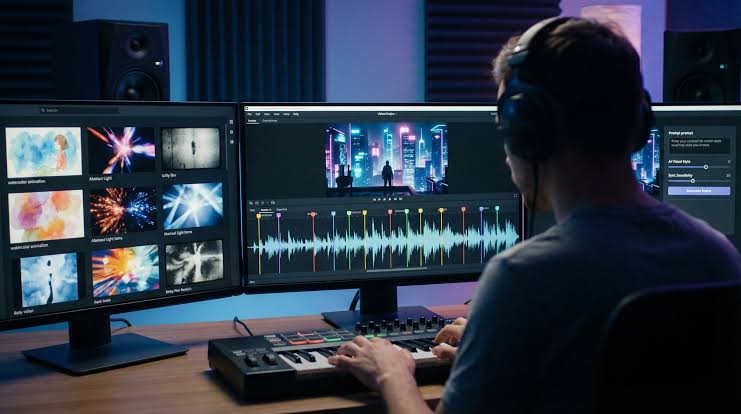
Independent artists no longer need a film crew, a big budget, or weeks of editing to release a music video. AI music video generators can turn a track into a finished visual in minutes. But the tools differ a lot. Some are built for speed and simplicity, others for experimental art or cinematic footage.
We compared five of the best options on ease of use, creative control, editing flexibility, and value, so you can pick the right one for your next release.
What to Look for in an AI Music Video Generator
Before the list, here are the criteria that matter most:
- Ease of use: Can you go from audio file to finished video without learning complex software?
- Creative control: Can you steer the style, mood, and pacing, or are you stuck with whatever the AI produces?
- Audio sync: Does the video respond to the beat, tempo, or lyrics, or does it simply play over the music?
- Editing after generation: Can you fix one weak scene without starting over?
- Export options: Does it support widescreen for YouTube and vertical formats for Reels, TikTok, and Shorts?
- Value: What is included for free, and what requires a paid plan?
1. Renderforest
Best for: Artists, producers, and small labels who want a complete, professional-looking music video without the learning curve
If you want the shortest path from song to finished video, the Renderforest ai music video generator is our top pick. It runs entirely in your browser, so there is nothing to install and no timeline to learn. You upload your track, choose a visual direction that fits your sound, and the AI builds the video around it. Then you can refine the result until it looks right.
That combination of simplicity and control is what sets Renderforest apart. Many AI video tools produce a one-shot result you either accept or regenerate from scratch. Renderforest lets you keep working on the video after it’s generated, which matters when you’re on a release deadline and one weak scene shouldn’t cost you the whole project.
What makes it our #1 choice:
- Built for beginners, useful for pros: First-time creators can finish a video in one sitting, while experienced artists save hours on visuals they would otherwise produce manually.
- Wide range of styles: Choose visuals that match your genre and mood, from cinematic and atmospheric to colorful and animated, so a lo-fi track and a dance anthem don’t end up looking alike.
- Editable, not one-and-done: Adjust the video after generation instead of starting over.
- Fast turnaround: Ideal when you’re working to a release date or publishing on a regular schedule.
- More than a video tool: Renderforest is a full creative platform. Alongside music videos, you can create logos, websites, and other kinds of video content, so your visual identity stays consistent across cover art, promo clips, and your artist site.
- Accessible pricing model: You can start creating without a large upfront investment, which suits independent artists working with limited budgets.
Ideal use cases:
- Single and album releases
- Lyric-style visuals
- Promo videos for streaming links
- Consistent visual content across an artist’s catalog
- Videos for labels, managers, and agencies producing content for multiple artists
Worth knowing: Some advanced features and higher-quality exports are tied to paid plans, so check the current plan details on the Renderforest site.
The verdict: For most artists, Renderforest offers the best balance of speed, simplicity, and flexibility. It’s the tool we’d recommend trying first.
2. Neural Frames
Best for: Electronic and experimental artists who want audio-reactive visuals
Neural Frames is built around the idea that visuals should move with the music. Its animations respond to the rhythm, energy, and structure of your track, so drops, builds, and beat changes show up on screen. That makes it a favorite among electronic producers, DJs, and experimental artists who want abstract, surreal, or psychedelic imagery tied closely to the sound.
Strengths:
- Strong audio-reactive behavior that syncs visuals to the track
- Well suited to abstract, evolving visual worlds
- Plenty of creative control if you’re willing to experiment
Limitations:
- A steeper learning curve than template-driven tools
- Polished results often take iteration and prompt tweaking
- Less suited to narrative or performance-style videos
Best use case: Visualizers for electronic, ambient, or experimental releases where atmosphere matters more than storytelling.
3. Kaiber
Best for: Stylized, artistic visuals
Kaiber turns text prompts and reference images into video with a distinct artistic look. Painterly textures, illustrated aesthetics, and dreamlike motion are where it shines. It became popular with musicians for lyric visuals and short clips where a memorable aesthetic matters more than photorealism.
Strengths:
- Distinctive, eye-catching styles that stand out in a crowded feed
- Works well with reference images, so you can build visuals around your album art or a mood board
- Good for short-form and looping content
Limitations:
- Better at stylized looks than realistic footage
- Keeping a consistent look across a full-length video can take effort
- Feature access and limits may depend on your subscription tier
Best use case: Lyric videos, album teasers, and social clips with a strong visual identity.
4. Runway
Best for: Creators who want cinematic, prompt-driven footage
Runway is one of the best-known names in generative video, offering advanced video models alongside a broad editing toolkit. It’s aimed at creators who think like filmmakers: you describe or upload individual scenes, generate footage, and assemble everything into a cohesive video. It can produce very polished, cinematic shots, but it asks more of you in planning, prompting, and editing.
Strengths:
- High-end, cinematic visual quality
- Flexible tools for generating and refining individual shots
- Good for concept-driven videos with a clear storyline or look
Limitations:
- You plan the scenes and stitch them together yourself
- Credits can add up on longer projects
- The slowest route from song to finished video
Best use case: Artists with a specific creative vision who are comfortable directing the process, or who plan to blend AI footage with their own material.
5. Pika
Best for: Short, shareable clips
Pika focuses on fast, engaging video generation, which makes it a natural fit for social media. If your goal is to promote a release with teasers, loops, and vertical clips for TikTok, Instagram Reels, and YouTube Shorts, it delivers quickly and with little friction. It’s less of a full music video production tool and more of a way to keep your feed active around a release.
Strengths:
- Quick generation of short, attention-grabbing clips
- Great for teasers, hooks, and looping visualizers
- Easy to test several ideas in one sitting
Limitations:
- Clips are short, so a full-length video means stitching several together
- Less control over long-form pacing and structure
- Works best as a companion to a main video, not a replacement
Best use case: Release-week promotion, chorus snippets, and social-first content.
Quick Comparison
| Tool | Best For | Learning Curve | Standout Feature |
| Renderforest | Complete, editable music videos | Low | Simple browser workflow plus a full creative platform |
| Neural Frames | Audio-reactive, abstract visuals | Medium–High | Visuals that respond to the music |
| Kaiber | Stylized, artistic looks | Medium | Distinctive aesthetics from prompts and images |
| Runway | Cinematic, director-style projects | High | Advanced generative video models |
| Pika | Short social clips | Low–Medium | Fast, shareable short-form output |
Which Tool Should You Choose?
- Want a finished, editable music video with minimal effort? Renderforest is the clear starting point.
- Making abstract, beat-driven visuals? Try Neural Frames.
- Chasing a painterly or illustrated look? Test Kaiber.
- Directing cinematic scenes shot by shot? Look at Runway.
- Need quick social teasers? Pika fits.
Many artists combine tools. For example, you might build the main video in Renderforest and add short teasers from Pika or Kaiber for social platforms.
Tips for Better AI Music Videos
- Define the mood first. Pick two or three words that describe the song (for example, “nostalgic, warm, cinematic”) and let them guide every visual choice.
- Use your own artwork. Cover art and brand colors keep your releases visually consistent.
- Match pacing to the song. Fast tracks suit quick cuts; slower ones benefit from longer, atmospheric shots.
- Try multiple versions. Compare a few options before choosing one instead of accepting the first output.
- Export for each platform. Use widescreen for YouTube and vertical for Reels, TikTok, and Shorts.
- Finish your audio first. Final mix and master before you build visuals, since great visuals can’t rescue a weak mix.
- Add context with text. Song title, artist name, and release date on screen help viewers who find the video without the surrounding post.
Frequently Asked Questions
Do I need video editing experience to use these tools?
Not with Renderforest or Pika. Runway and Neural Frames reward more technical and creative experience.
Are there free options?
Most platforms, Renderforest included, let you start for free or try before paying. Advanced features and higher-quality exports usually require a paid plan.
Can I post AI-generated music videos on streaming and social platforms?
Generally yes, but check each tool’s terms for commercial use and make sure you own the rights to the music you upload.
How long does it take to make an AI music video?
It depends on the tool. Template-driven platforms like Renderforest can get you a first version in a short session, while shot-by-shot tools like Runway take considerably longer.
Will AI replace traditional music videos?
Unlikely. AI lowers the barrier for independent artists, but larger productions still benefit from directors, performers, and crews. Many artists now blend both approaches.
Final Thoughts
The best AI music video generator is the one that fits your workflow and gets your music seen. Neural Frames excels at audio-reactive art, Kaiber delivers standout style, Runway offers cinematic depth, and Pika keeps your social channels full. For most artists, though, Renderforest is the strongest place to start: simple enough to use today, flexible enough to grow with you, and backed by a wider set of creative tools.
Try it with your next track, then compare it against the alternatives above.
Features and pricing change often, so confirm current details on each platform’s website.
