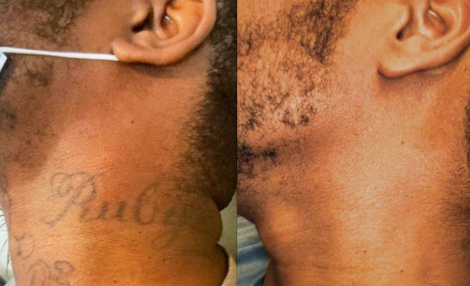
Tattoo removal has become far more accessible over the past decade, but the way it works isn’t identical for every person sitting in the treatment chair. Skin tone plays a direct role in how a laser interacts with ink, how many sessions a tattoo will take to fade, and what risks are worth watching for afterward. Understanding these differences helps set realistic expectations before you book a first appointment.
How Laser Tattoo Removal Actually Works
Laser tattoo removal relies on a process called photothermolysis, where pulses of light energy target ink particles beneath the skin and break them into smaller fragments. The body’s immune system then carries those fragments away through the lymphatic system over the following weeks. This is why removal always takes multiple sessions spaced several weeks apart rather than a single visit.
The laser itself doesn’t distinguish between “good” and “bad” ink absorption on its own. It responds to contrast: how much the pigment in the tattoo differs from the pigment in the surrounding skin. That contrast is exactly where skin tone enters the picture.
Why Skin Tone Changes the Equation
Melanin, the pigment that gives skin its color, absorbs laser light just like tattoo ink does. On lighter skin, there’s a bigger contrast between the ink and the surrounding tissue, so the laser can target the tattoo with less risk of also heating the skin itself. On deeper skin tones, melanin competes with the ink for that laser energy, which means the treatment has to be more carefully calibrated.
This doesn’t mean darker skin can’t be treated effectively. It means the wavelength, pulse duration, and cooling methods need to be selected with more precision to avoid burning the skin or triggering pigment changes.
The Fitzpatrick Scale and Why It Matters
Most clinics classify skin using the Fitzpatrick scale, which ranges from Type I (very fair, always burns, never tans) to Type VI (deeply pigmented, never burns). This classification isn’t just a formality on an intake form. It directly informs which laser and settings a technician will choose.
Someone with Type I or II skin can often tolerate higher energy settings with fewer complications. Someone with Type V or VI skin typically needs lower fluence, longer wavelengths, and more spacing between sessions to give the skin time to recover without overheating.
Laser Types Matched to Skin Tone
Q-switched Nd:YAG lasers, which operate at a 1064nm wavelength, are generally considered safer for medium to dark skin tones because that wavelength passes through melanin with less absorption, reducing the chance of pigment damage. Shorter wavelengths, like the 532nm setting often used for red or orange ink, carry higher risk for deeper skin tones and are used far more cautiously, if at all.
Picosecond lasers have also changed the landscape, delivering energy in even shorter bursts that generate less heat overall. This makes them a strong option across a wider range of skin tones, including those that previously had fewer safe removal options.
Risks: Hyperpigmentation and Hypopigmentation
Two of the most common side effects after laser tattoo removal are hyperpigmentation, where the treated area darkens, and hypopigmentation, where it becomes lighter than the surrounding skin. Both can occur on any skin tone, but darker skin is statistically more prone to visible pigment changes because it has more melanin to react to the heat and inflammation from treatment.
These changes are often temporary, resolving over several months as the skin’s natural pigment production evens out. In some cases, though, changes can persist longer, which is why settings need to be conservative rather than aggressive on higher Fitzpatrick types.
What to Expect During Treatment on Darker Skin
Sessions for deeper skin tones are often spaced further apart, sometimes eight to twelve weeks instead of six, to give the skin more recovery time between treatments. Technicians may also run a test patch on a small area before committing to full treatment, checking how the skin responds before moving forward.
Total session counts can end up similar to lighter skin, though the pace tends to be slower and more incremental. Patience during this process matters more than pushing for faster results, since rushing sessions on darker skin raises the risk of scarring or permanent pigment change.
Choosing a Provider Who Understands Your Skin
Not every clinic has equal experience treating a full range of skin tones, and this is one of the most important factors in getting a safe, effective outcome. A leading tattoo removal clinic in Hamilton, ON will typically have multiple laser types on hand and a technician trained to assess Fitzpatrick type before ever firing the first pulse. Asking directly about a provider’s experience with your specific skin tone is a reasonable and useful question, not an awkward one.
The Bottom Line
Tattoo removal isn’t a one-size-fits-all process, and skin tone is one of the biggest variables in how it plays out. The safest path forward is choosing a provider who tailors laser type, settings, and session spacing to your specific skin, rather than applying the same approach to everyone who walks through the door.
