
By Ryan Haidet
Plinko is a chance-based game built around a simple idea. A ball is released from the top of a board filled with pegs. As it moves downward, it repeatedly changes direction before landing in one of several multiplier slots. The multiplier in the final slot determines the result of the round. The basic controls are easy to understand, but several settings can change the way the game behaves. Players can usually choose a stake, select a risk level, and change the number of rows on the board. These settings affect volatility and the range of possible multipliers rather than allowing direct control over the ball. Players looking at plinko real money games should understand these rules before placing a stake. The visual format may look simple, but each drop involves probability, payout distribution, and uncertainty. Knowing what the available settings actually change makes the game easier to interpret.
What Is the Plinko Game?
Plinko uses a vertical board covered with rows of pegs. A ball starts near the top and moves downward until it reaches one of the multiplier slots at the bottom. Every time the ball reaches a peg, it can move toward one side or the other. After several such movements, the ball eventually reaches its final position. The game then applies the multiplier shown in that slot. The central part of the board generally contains more commonly reached outcomes. The outer sections can contain larger multipliers, particularly when higher-risk settings are selected. These extreme positions are normally less likely to be reached. Players do not normally choose the final slot themselves. Their main decisions are made before the ball is released.
Basic Plinko Game Rules
The rules of Plinko can be divided into four main stages: setting the stake, selecting the board configuration, choosing the risk level, and starting the drop.
Choosing the Bet Amount
Before a round starts, the player selects how much to stake. This amount becomes the base value used to calculate the final result. A larger bet can increase the payout, but it does not improve the chance of hitting a specific slot. It only increases the amount of money at risk.
Selecting the Number of Rows
The board can usually be configured with different numbers of rows. A smaller board gives the ball fewer peg interactions before reaching the bottom. A larger board creates a longer route. Changing the number of rows can also change the available multiplier layout. This means that the possible results may differ between board configurations. More rows should not be interpreted as a way to improve the probability of winning. They mainly change the structure of the round and the distribution of possible outcomes.
Choosing a Risk Level
Risk settings normally control volatility. A low-risk configuration tends to offer a narrower range of multipliers. A high-risk configuration can produce much larger differences between low and high outcomes. This concept is common across chance-based casino games. Similar principles of fixed rules and uncertain individual outcomes apply in games available through platforms such as https://indian.1xbet.com/en/games/andar-bahar, although the mechanics of those games are different from Plinko. Selecting high risk does not automatically make a round more profitable. It simply changes the distribution of potential results.
Dropping the Ball
Once all settings are selected, the player starts the round. The ball enters the board and moves through the peg arrangement. No additional action is usually required while it falls. When the ball reaches a multiplier slot, the round finishes and the result is displayed.
How Plinko Multipliers Work
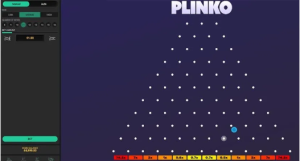
Multipliers determine how much value is returned from a particular drop. They are displayed along the bottom of the board.
Multiplier Slots
Each landing slot has its own multiplier. Some multipliers return less than the original bet, while others return the same amount or more. The exact values depend on the game settings. Low-risk boards usually have a smaller range of multipliers. High-risk boards can offer much larger multipliers at the edges, but they also include more low-value results. This is the main trade-off in Plinko. Bigger possible payouts usually come with bigger swings.
Calculating the Round Result
The final multiplier is applied to the stake. For example, suppose a player starts with a stake of ₹100. If the ball reaches a 2x slot, the resulting value is ₹200. If it reaches a 0.5x slot, the resulting value is ₹50. A 1x multiplier usually returns the same amount as the original bet. A multiplier below 1x returns less than the stake. A multiplier above 1x returns more than the original bet.
Plinko Risk Levels Explained
Risk level is one of the most important settings because it determines how widely the possible results can vary.
Low Risk
Low-risk settings usually make the multipliers less extreme. The biggest payouts may be smaller, but results are generally more stable. Results therefore tend to stay within a more limited range. Low risk should not be confused with guaranteed profit. Losing outcomes can still occur.
Medium Risk
Medium risk sits between the two extremes. The board usually has a wider range of multipliers than low-risk mode. It is still less volatile than the highest-risk setting. This means moderate payouts may appear more often, while larger multipliers are less common.
High Risk
High-risk mode usually provides the widest variation. Some slots have low multipliers, while slots near the edges can offer much higher payouts. These outer slots are usually harder to reach. High-risk settings can increase possible payouts, but they do not improve the player’s odds.
How the Number of Rows Changes the Game
The row setting controls the size of the active Plinko board. Each additional row adds another stage through which the ball must travel. This creates more possible routes before it reaches the bottom. The multiplier configuration can also change when the number of rows changes. A larger board may provide more landing positions or a wider range of values. However, the number of rows does not give the player direct control over the route. Choosing the maximum number of rows does not guarantee access to the best result. Players should think of rows as a board configuration setting rather than a strategy for predicting outcomes.
Plinko Game Board and Ball Movement

The movement of the ball is the central visual feature of the game. The board is designed so that the ball repeatedly interacts with pegs before reaching the multiplier area.
How the Peg System Works
Each peg creates a branching point in the ball’s route. The ball can continue toward one side or the other before reaching another peg. After several interactions, many possible routes become available. Some routes lead toward the center, while others gradually move toward the edges. This branching structure is why the final result cannot normally be determined simply by watching the first few movements.
Where the Ball Can Land
The ball lands in one of the multiplier slots at the bottom of the board. Middle slots are usually more common because there are more possible paths that lead toward the center. Edge slots are harder to reach because they need a less common sequence of movements. This is why the highest multipliers are often placed near the edges. The exact odds depend on the game settings.
Manual Play and Automatic Drops
Plinko can normally be played one round at a time or through an automatic feature that starts repeated drops.
Playing One Round at a Time
Manual play gives the player control over when each individual round begins. The process is straightforward. The player chooses the stake, rows, and risk setting, starts the ball, and waits for the result. Settings can then be changed before the next drop.
Using Auto Play
Auto play allows several rounds to run without pressing the drop button every time. The same selected parameters can remain active across multiple rounds. This can make gameplay faster, but it also causes stakes to be placed more quickly. Automatic play does not improve the probability of reaching particular multipliers. It changes the speed and convenience of play, not the underlying outcome of each drop.
RTP, Probability, and Random Results in Plinko
Understanding basic probability is useful because Plinko can look more predictable than it really is.
What RTP Means
RTP, or return to player, is the percentage a game is designed to return over a very large number of rounds. It does not predict the result of one session. For example, a 96% RTP does not mean a player will get back 96% of every bet. Short-term results can be much higher or lower. Players should check the game information for the exact RTP and rules.
How Random Outcomes Work
Individual Plinko rounds should be treated as separate events. A series of low multipliers does not mean a high multiplier will come next. Landing on one side several times also does not make the other side more likely. These patterns can look important, but they do not reliably predict future results.
Can Plinko Results Be Predicted?

Plinko can make players look for patterns in the way the ball moves. However, past drops cannot reliably predict where the next ball will land. Similar paths may appear for a few rounds, but that does not create a working system. Changing the stake also does not improve prediction. It only changes how much money is at risk. Switching the number of rows after wins or losses can change the multiplier range, but it cannot guarantee a better result. Plinko predictors, hacks, and fixed winning patterns should therefore be treated with caution.
Common Plinko Game Rules Players Misunderstand
High risk does not mean a higher chance of making money. It usually means bigger swings between wins and losses. The highest multiplier may be larger, but low-value results can also matter more. More rows do not automatically improve payouts either. They change the board and available multipliers, but they do not guarantee a better return. A larger bet also does not change where the ball lands. It only increases the amount won or lost. Previous results do not affect the next drop, so an edge result is not “due” after several middle results. Auto play also gives no extra advantage. It only repeats rounds using the same settings.
Example of a Plinko Round
A simple example can make the rules easier to understand.
Setting Up the Round
Suppose a player selects a ₹100 stake. They choose a medium-risk setting and select their preferred number of rows. The board then displays the multiplier configuration associated with those options. At this stage, the player can review the possible landing values before beginning the round.
Completing the Drop
The player starts the game and the ball moves through the peg board. After several changes of direction, it lands in a 1.5x slot. The game applies that multiplier to the ₹100 stake, creating a ₹150 result. The round is now complete. If the player wants to continue, they can keep the existing settings or adjust the stake, risk level, or rows before starting another drop.
Tips for Understanding Plinko Rules Before Playing
The most useful first step is to learn what each control actually changes. Stake size affects financial exposure. Risk settings affect volatility and multiplier distribution. Rows change the board configuration. None of these controls provide direct influence over the precise path of the next ball. Players should also inspect the multiplier table before starting. This helps show how potential outcomes differ between low-, medium-, and high-risk settings. It is equally important to distinguish theoretical statistics from short-term results. RTP and probability describe behavior over large numbers of rounds. They cannot tell a player what will happen on the next drop. Repeated-drop features should be used carefully because they can increase the speed at which money is wagered. Setting a spending limit before starting makes it easier to track overall exposure.
Frequently Asked Questions About Plinko Game Rules
What Determines Where the Plinko Ball Lands?
The game’s underlying mechanics determine the route of the ball through the peg board. Players normally choose the game settings but do not directly choose the final landing position.
Does the Number of Rows Affect the Payout?
It can affect the available multiplier structure and the number of possible landing positions. It does not guarantee that the player will receive a higher multiplier.
Which Plinko Risk Level Has the Highest Multipliers?
High-risk configurations generally contain the largest potential multipliers. They also tend to have greater volatility and a wider range of possible outcomes.
Can Players Control the Direction of the Ball?
Normally, no. Once the drop starts, players do not manually steer the ball through the pegs.
Are Plinko Rounds Independent?
Individual rounds should generally be treated as independent. Previous results do not provide a reliable prediction of where the next ball will finish.
Does Increasing the Bet Improve the Odds?
No. A larger stake increases the amount affected by the multiplier but should not change the probability of a particular landing position.
Can Plinko Be Played Automatically?
Many versions provide an automatic drop feature. It can start several rounds using the same settings, but it does not improve the odds.
Is There a Guaranteed Way to Win Plinko?
No strategy can guarantee a particular multiplier on the next drop. Risk settings and rows allow players to change the structure and volatility of the game, not to remove uncertainty.
Conclusion
Plinko game rules are based on a simple sequence. The player chooses a stake, selects the number of rows and risk level, releases the ball, and receives a result based on the multiplier where it lands. The main settings affect different parts of the game. Stake size determines financial exposure, rows change the board configuration, and risk levels modify volatility and the multiplier range. They do not provide reliable control over the next result. Understanding these differences is more useful than trying to identify patterns in previous drops. Plinko is easy to operate, but every new round still involves an uncertain outcome.
