🎯 Free Face Shape Detector — All 7 Shapes — No Sign-Up Start Free Test ›

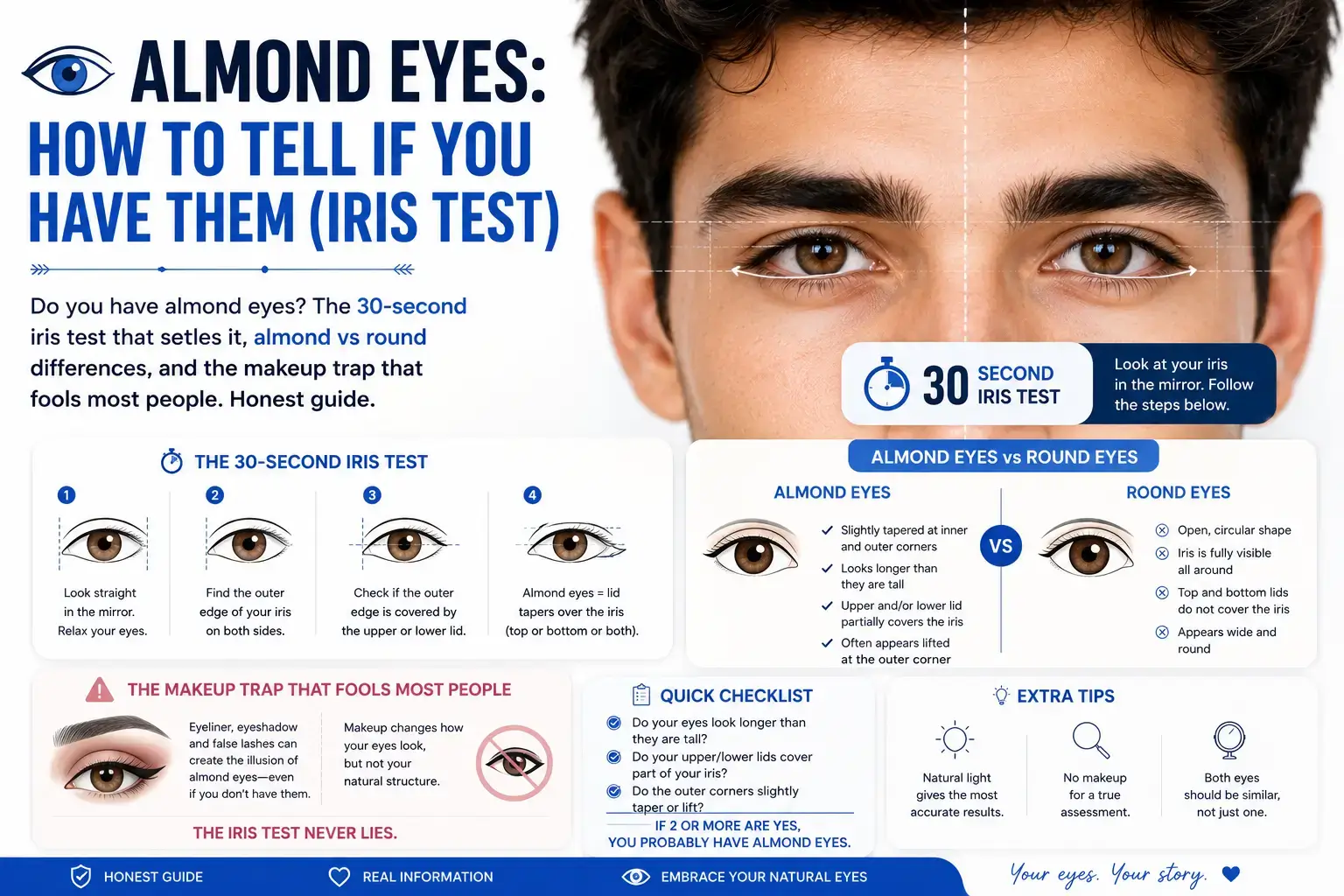
Rectangle Face Shape vs Oblong: The Real Difference
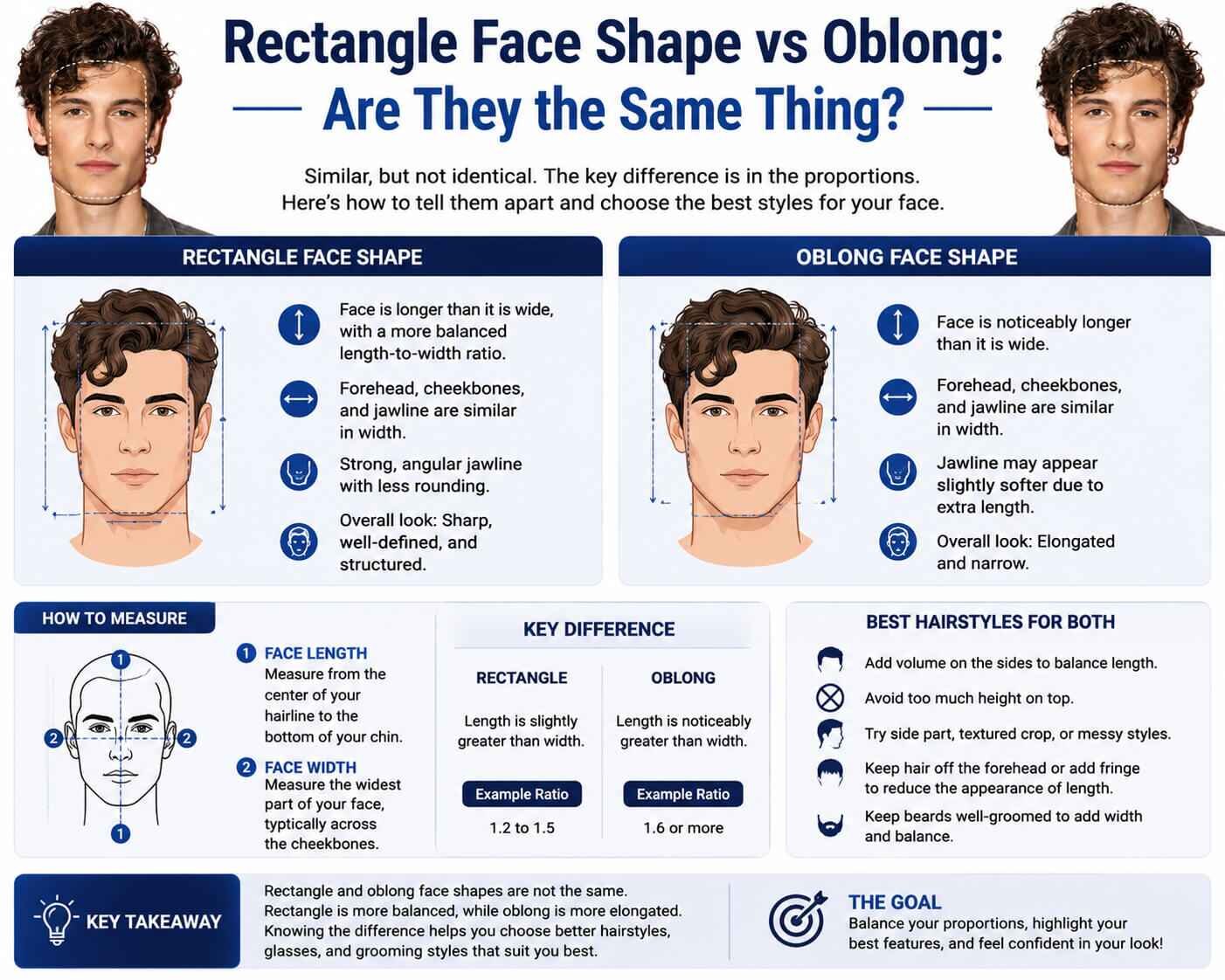
Rectangle Face Shape vs Oblong: The Real Difference

Quick answer: Rectangle and oblong describe the same proportions with one difference: the jawline. A rectangle face has a squared, angular jaw with visible corners. An oblong face has the same length and the same consistent widths, but with a softer, more rounded jaw. That is the whole distinction. For haircuts, glasses, and beards, the … Read more
Long Face Shape: Is It the Same as Oblong?

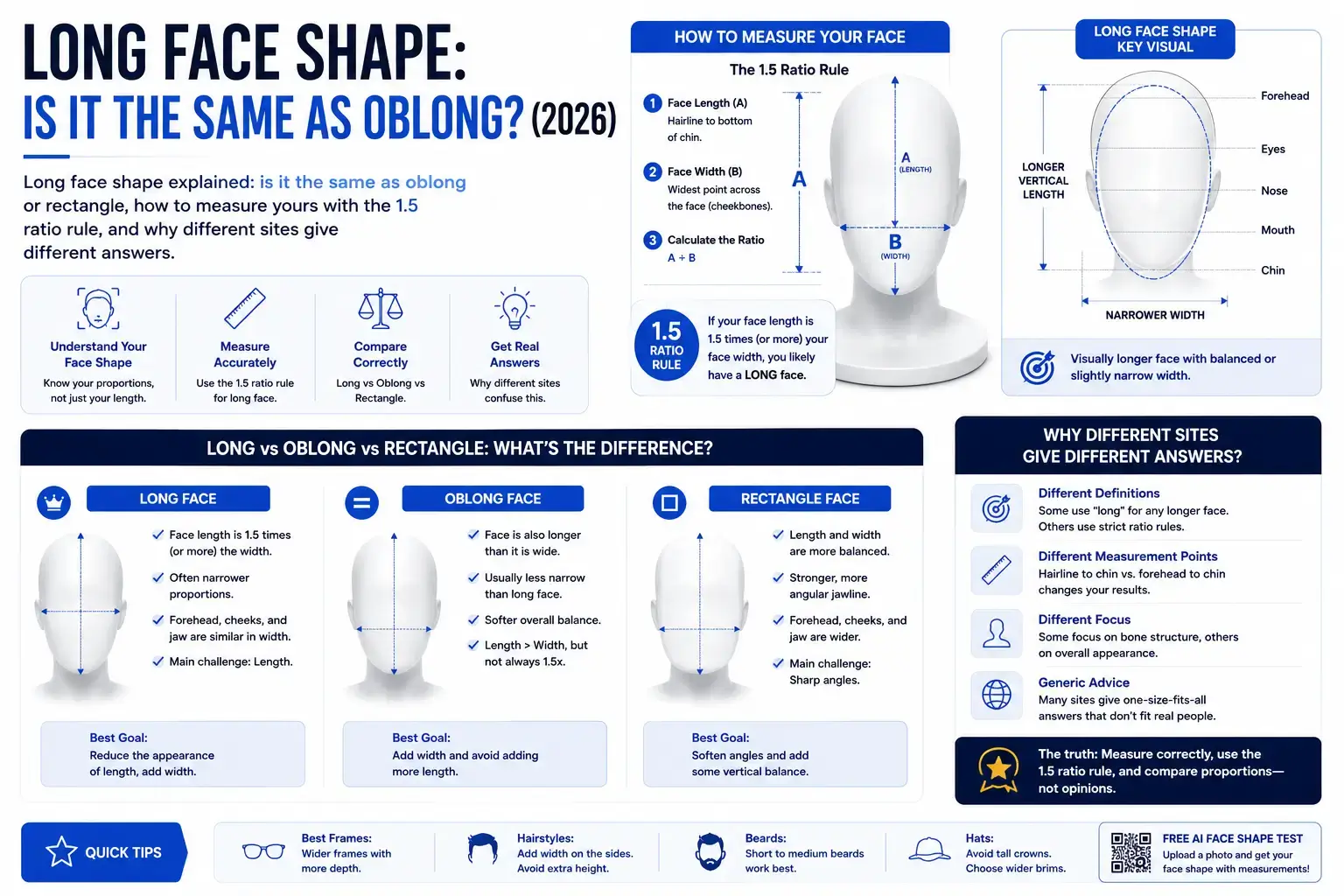
Long Face Shape: Is It the Same as Oblong? (2026)

Quick answer: Yes. Long face shape is the everyday name for what measurement guides call oblong. Both describe a face that is clearly longer than it is wide, with the forehead, cheekbones, and jaw staying close to the same width from top to bottom. The test is one number: divide your face length by your … Read more

Glasses for Oval Face Female: What Actually Fits

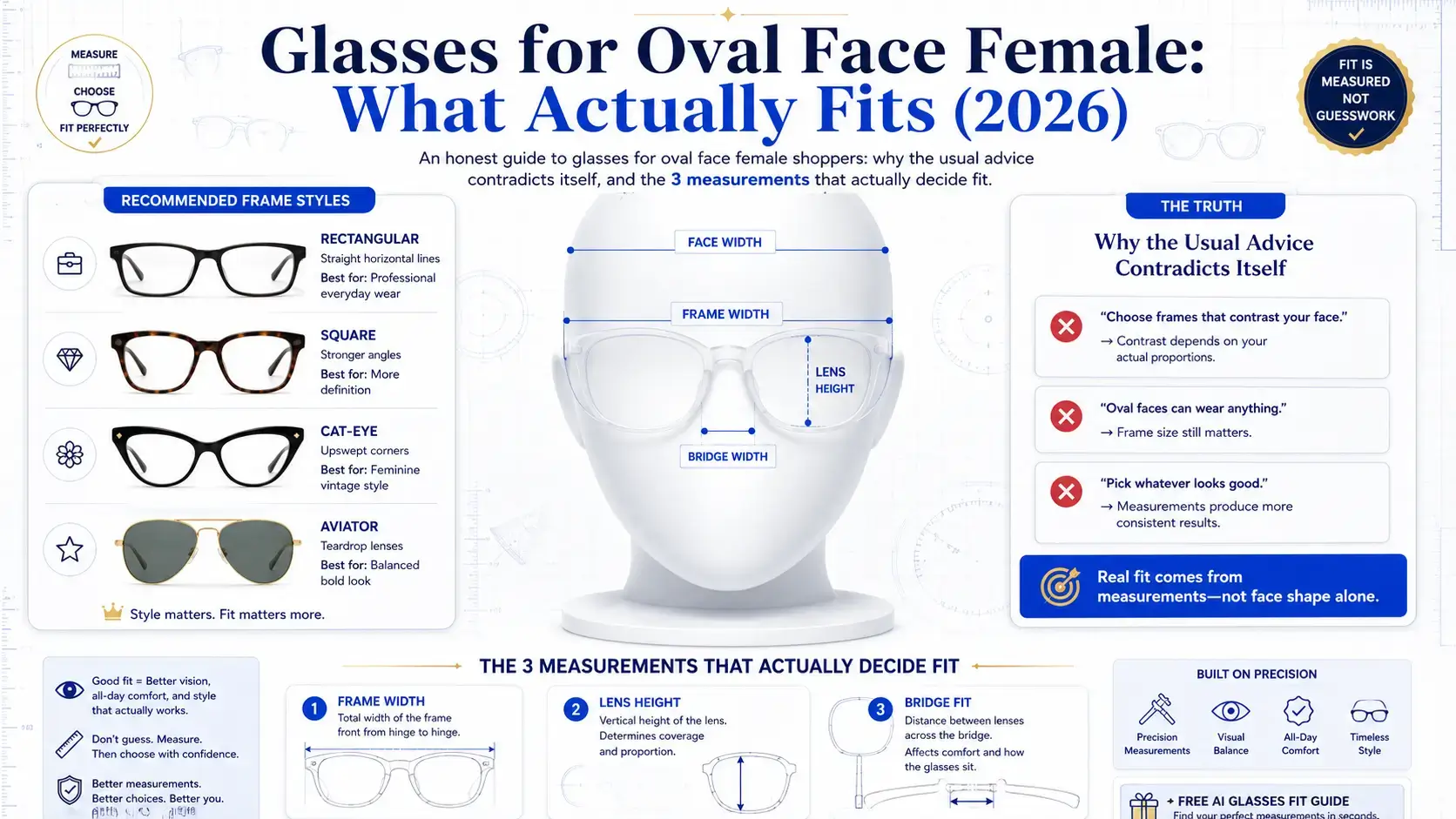
Glasses for Oval Face Female: What Actually Fits (2026)

Quick answer: For an oval face, the four frame styles most often recommended are square, rectangular, cat-eye, and aviator, because their straight lines contrast with soft facial curves. But here is the part most guides skip: face shape is the weakest of the three things that decide whether glasses suit you. Frame width, bridge width, … Read more

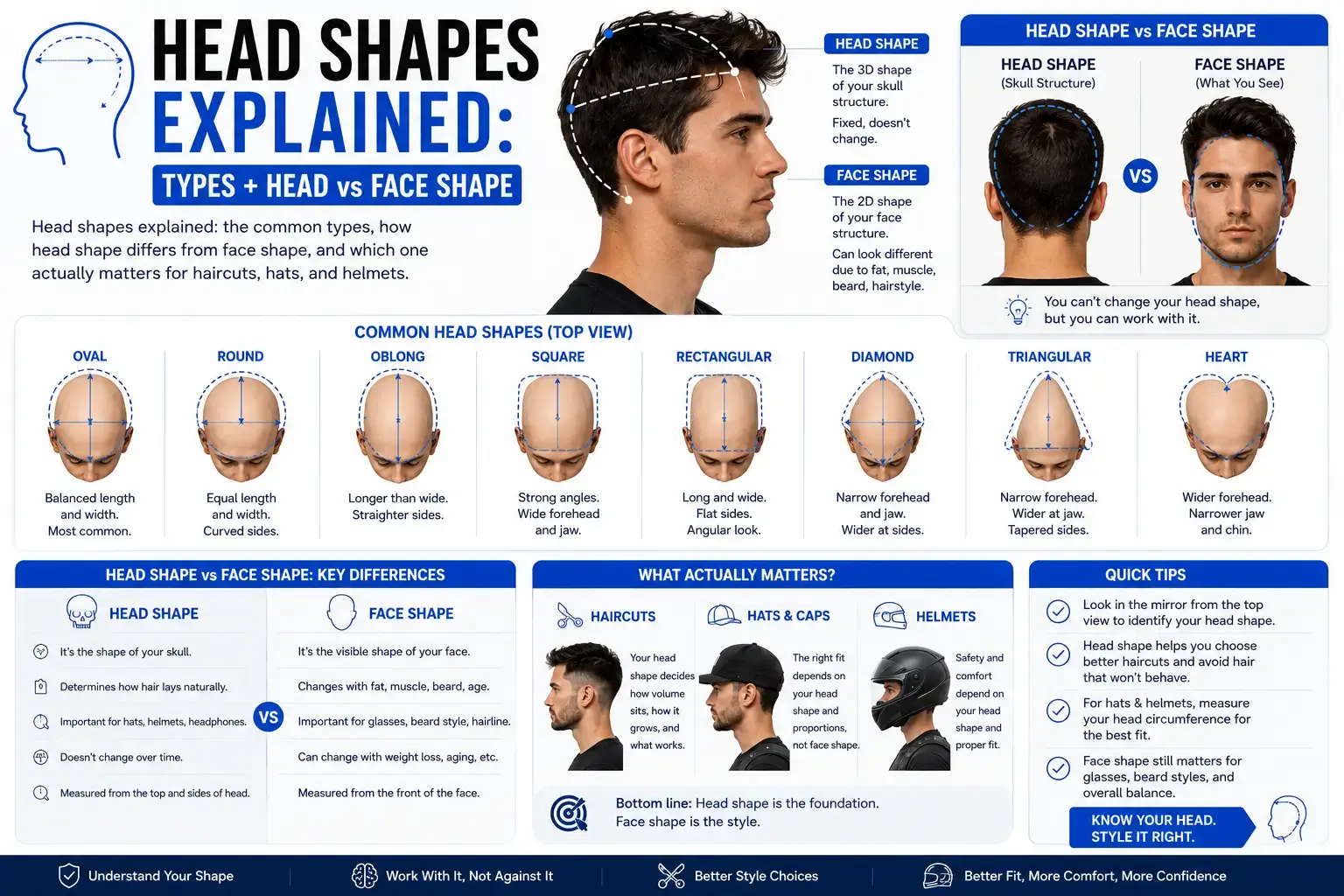
Head Shapes Explained: Types + Head vs Face Shape

Head Shapes Explained: Types + Head vs Face Shape

Quick answer: Head shape and face shape are different things that people constantly mix up. Head shape describes the skull’s overall form, seen best from above or behind: rounder versus longer, and flatter versus curved at the back. Face shape describes the front view: the outline from hairline to jaw. For most everyday decisions (haircuts, … Read more

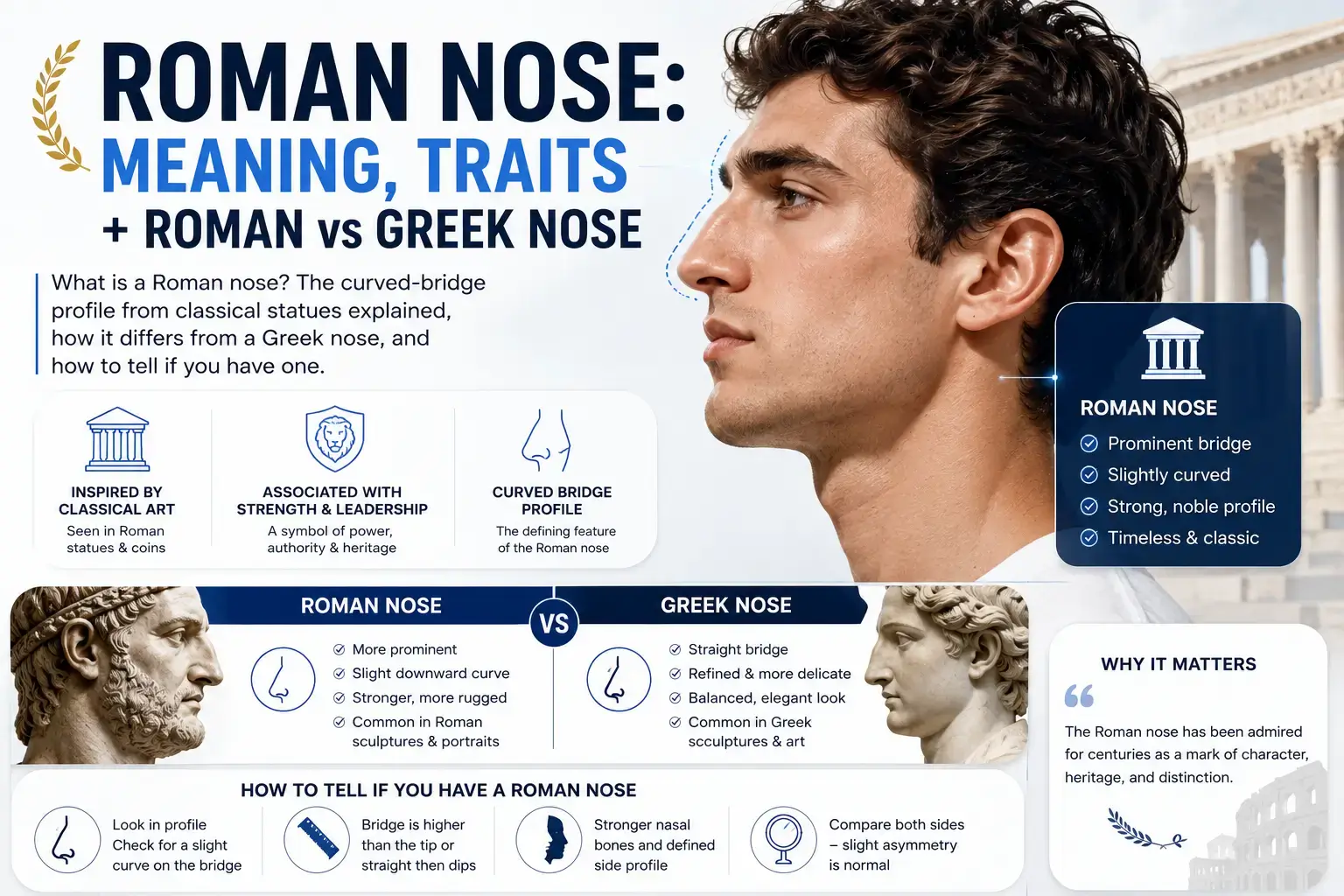
Roman Nose: Meaning, Traits + Roman vs Greek Nose

Roman Nose: Meaning, Traits + Roman vs Greek Nose

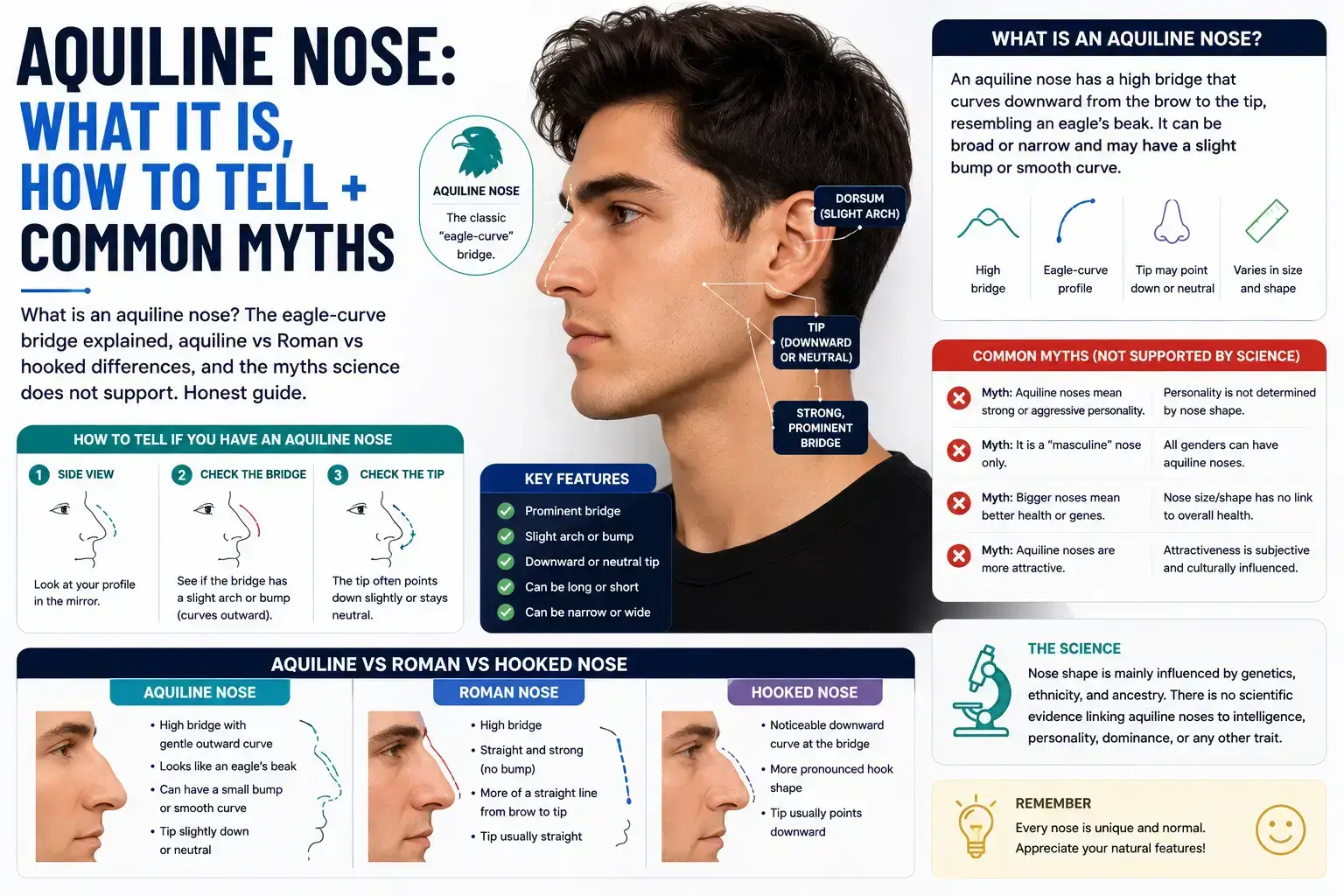
Quick answer: A Roman nose has a prominent, outward-curved bridge, the profile seen across ancient Roman statues and coins, which is where the name comes from. It is anatomically the same shape as an aquiline nose: Roman is the cultural name, aquiline the anatomical one. Its classic contrast is the Greek nose, which runs perfectly … Read more